
-
Details
- Date
- 1980
- Media category
- Sculpture
- Materials used
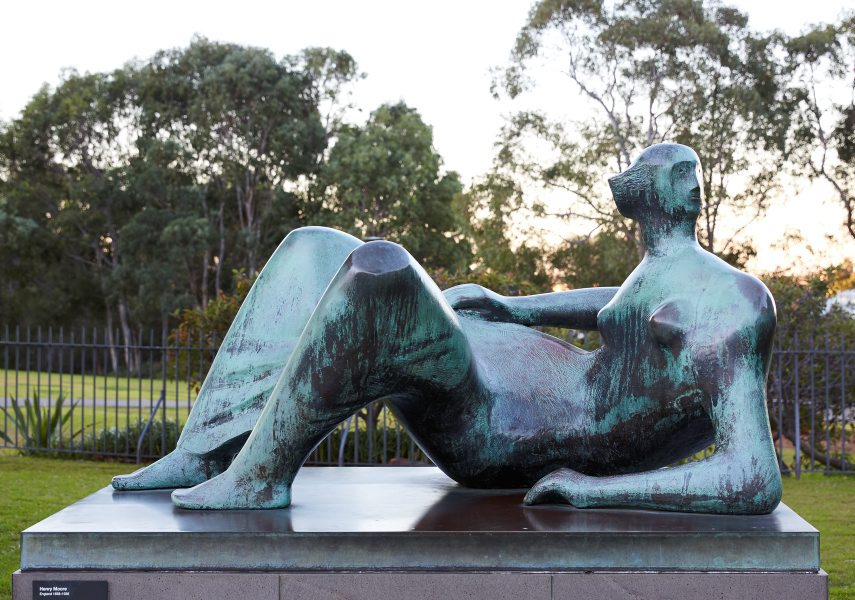
- bronze, green patina
- Edition
- 1/9
- Dimensions
- 123.3 x 219.6 x 157.0 cm
- Signature & date
Signed back left corner on top of base, "Moore...". Not dated.
- Credit
- Purchased 1981
- Location
- Not on display
- Accession number
- 6.1981
- Copyright
- © Henry Moore Foundation/DACS. Copyright Agency
- Artist information
-
Henry Spencer Moore
Works in the collection
- Share
-


-
About
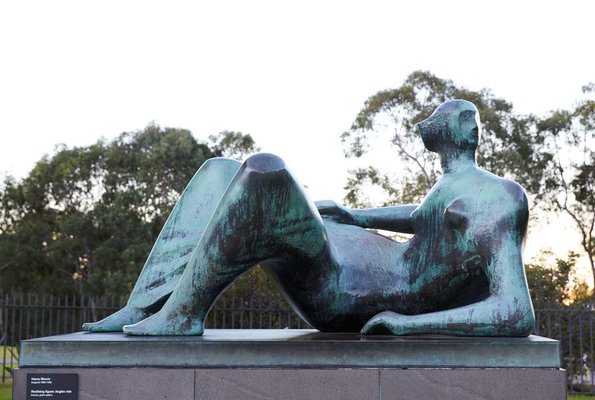
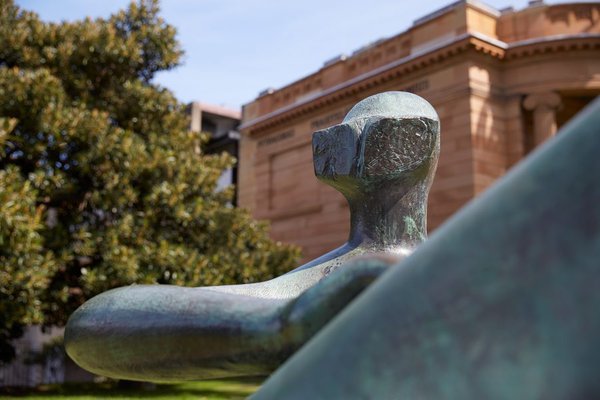
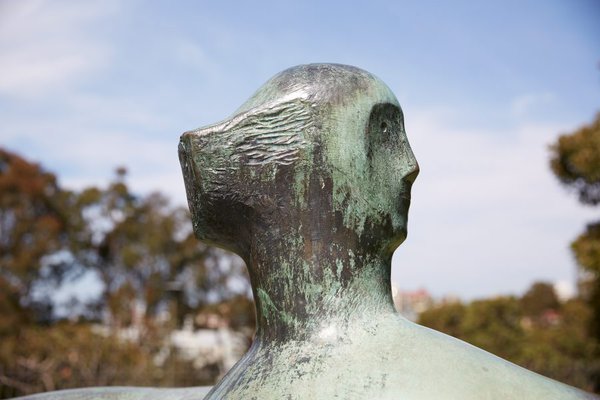
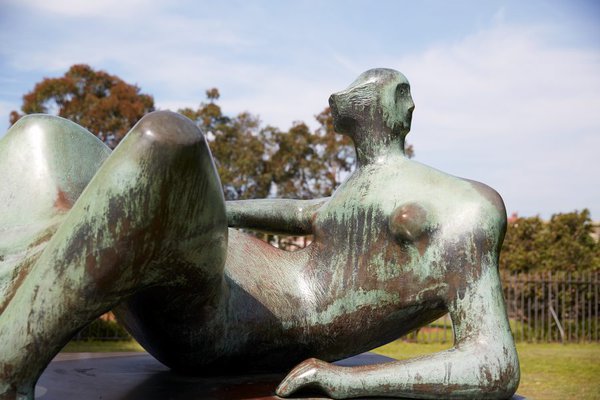
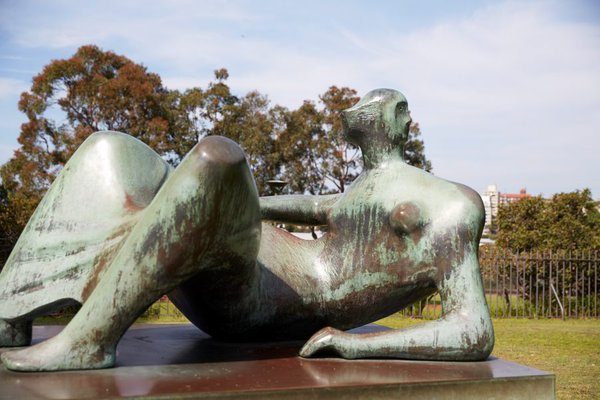
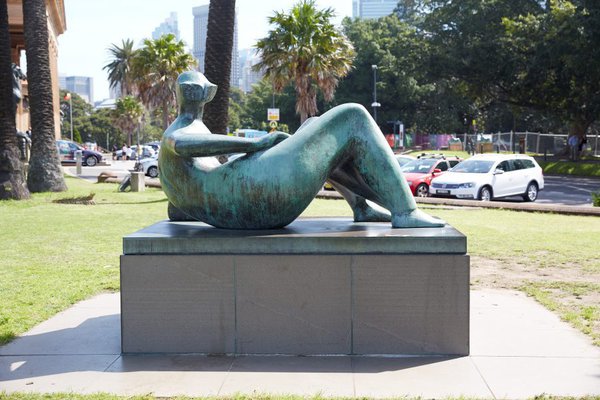
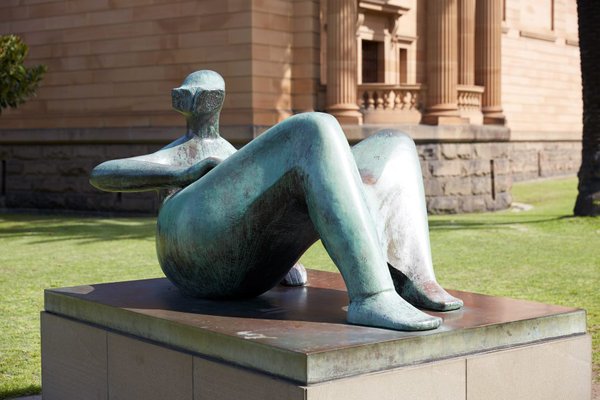
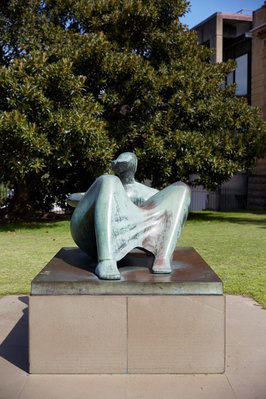
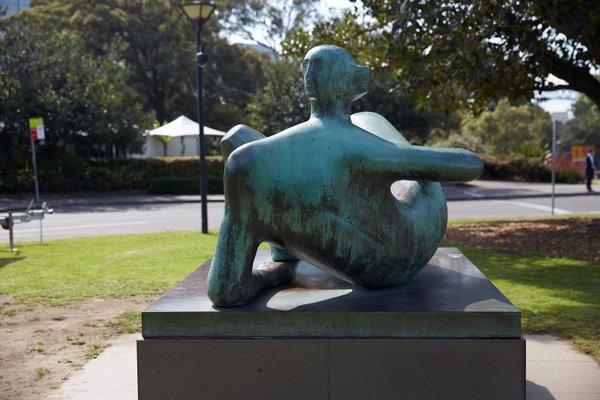
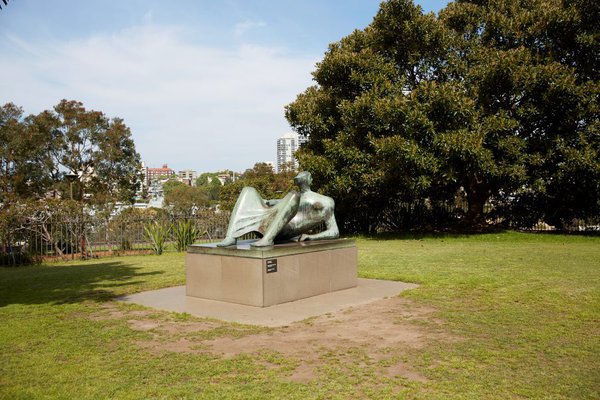
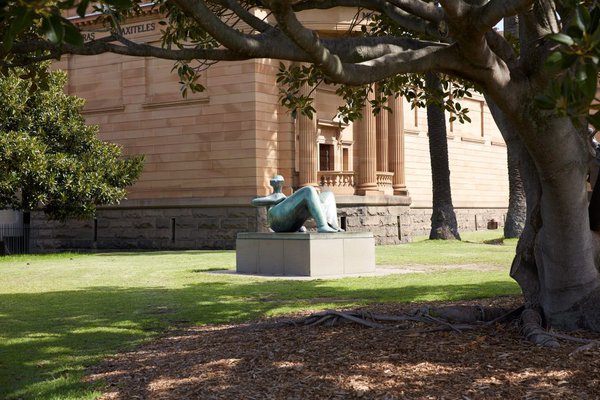
Henry Moore described how, as a young boy, he rubbed his mother's broad rheumatic back. This experience suggests a personal reading for the reclining woman, a form that has dominated Moore's sculpture. The maternal image - the mature woman chosen by Moore - has become an archetypal form, an earth mother to be impregnated by wind and rain. In situ, waiting and watching, she embodies instinctual alertness, the apprehension of danger. The sources are a mixture of primitive and classical forms, their reconciliation being a major theme in Moore's work. In this version of the figure, the horizontal arm balances the massive angular shoulder, and the frescoes of Giotto and Masaccio are an acknowledged source for the monumental forms and the taut drapery. As Moore once said: "If a work of sculpture has its own life and form, it will be alive and expansive, seeming larger than the stone or wood from which it is carved. It should always give the impression... of having grown organically, created by pressure from within." He described three fundamental poses: "One is standing, the other is seated and the third is lying down... of the three poses, the reclining figure gives the most freedom, compositionally and spatially. The seated figure has to have something to sit on. You can't free it from its pedestal. A reclining figure can recline on any surface. It is free and stable at the same time. It fits in with my belief that sculpture should be permanent, should last for eternity."
Art Gallery Handbook, 1994
-
Exhibition history
Shown in 1 exhibition
Three years on: acquisitions 1978-81, Art Gallery of New South Wales, Sydney, 15 Oct 1981–01 Dec 1981
-
Bibliography
Referenced in 6 publications
-
Sir Alan Bowness (Editor), Henry Moore: sculpture 1921-1986, London, 1955-1988, vol 5, 675 (illus.).
-
Edmund Capon AM, OBE and Jan Meek (Editors), Portrait of a Gallery, 'European 20th Century Art', pg. 91-95, Sydney, 1984, 93 (colour illus.).
-
René Free, Art Gallery of New South Wales handbook, 'European', pg. 36-56, Sydney, 1988, 56.
-
Renée Free, AGNSW Collections, 'The Western Heritage, Renaissance to Twentieth Century', pg. 108-172, Sydney, 1994, 171 (colour illus.).
-
Renée Free, Three years on: a selection of acquisitions 1978-1981, 'European Art', pg. 27-36, Sydney, 1981, 35 (colour illus.). cat.no. 4
-
Greame Sturgeon, Art and Australia, 'Lost and found: a decade of sculpture at the Art Gallery of New South Wales', pg. 74-79, Sydney, Spring 1984, 71.
-