-
Details
- Alternative title
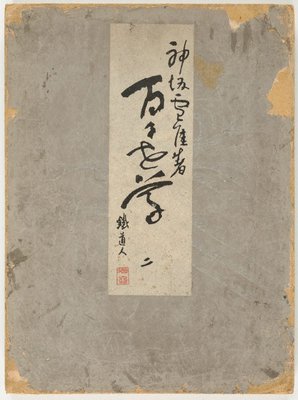
- World of things: vol.2
- Place where the work was made
-
Japan
- Period
- Meiji period 1868 - 1912 → Japan
- Date
- 1909
- Media categories
- Print , Book
- Materials used
- folded book: 23 leaves, 20 woodblock prints; ink and colour on paper
- Dimensions
-
29.8 x 22.2 cm leaf; 29.9 x 22.2 x 2.2 cm closed book; 29.9 x 44.6 cm open book
:
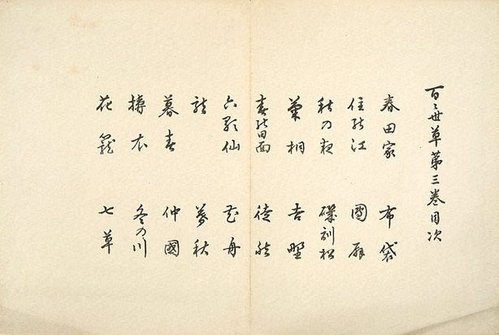
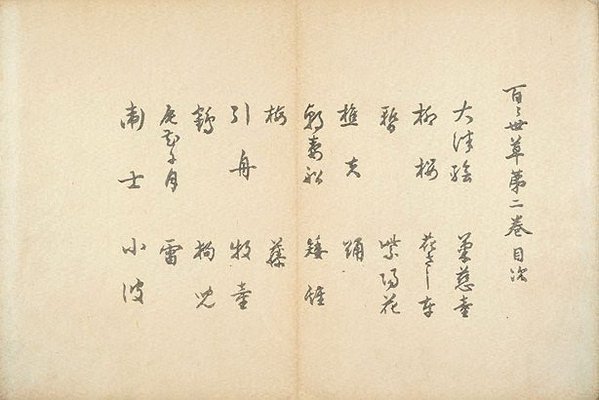
a - [table of contents], 29.8 x 44.5 cm, text; leaf a and leaf b
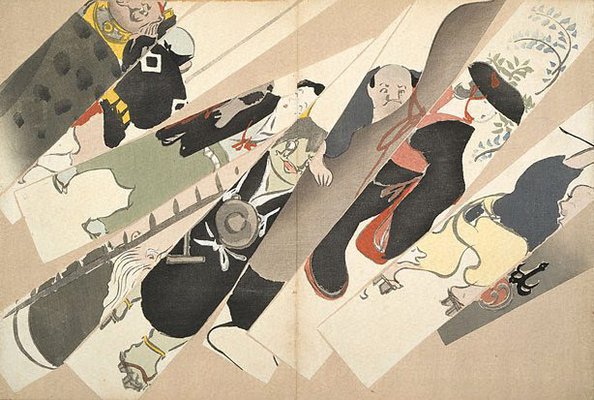
b - Otsu-e (Folk picture in Otsu), 29.8 x 44.5 cm, image; verso leaf b and leaf c
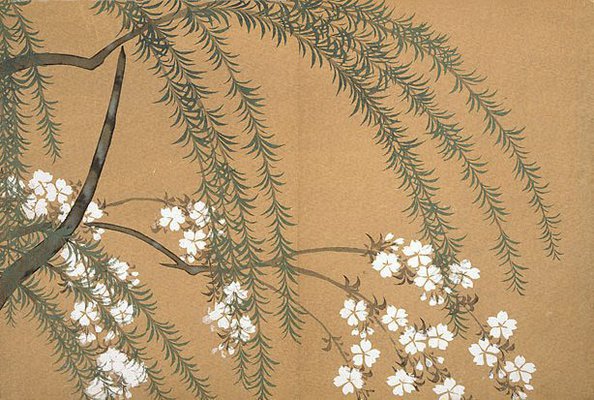
c - Yanagi sakura [A willow and cherry blossoms], 29.8 x 44.5 cm, image; verso leaf c and leaf d
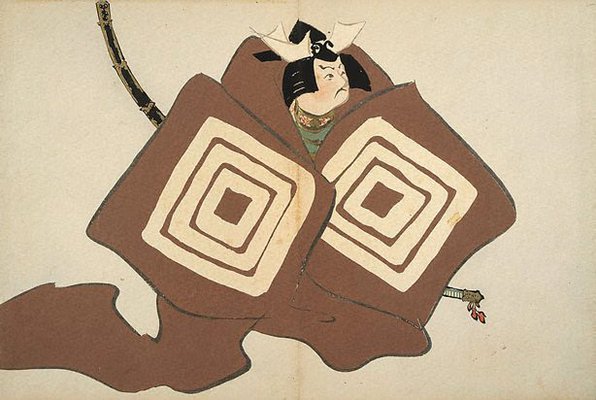
d - Shibaraku (A Kabuki character], 29.8 x 44.5 cm, image; verso leaf d and leaf e
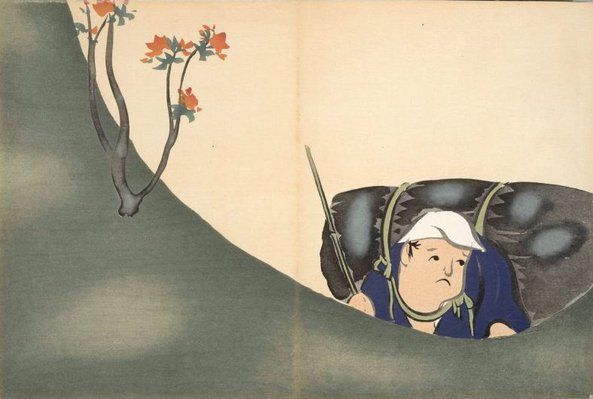
e - Shôfu (A woodcutter], 29.8 x 44.5 cm, image; verso leaf e and leaf f
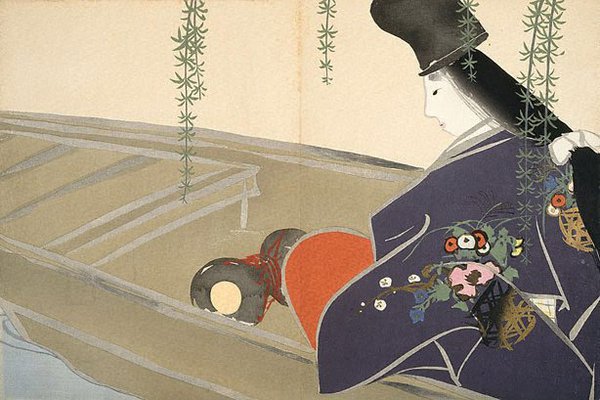
f - Asazuma-bune (A noble man on the boat), 29.8 x 44.5 cm, image; verso leaf f and leaf g
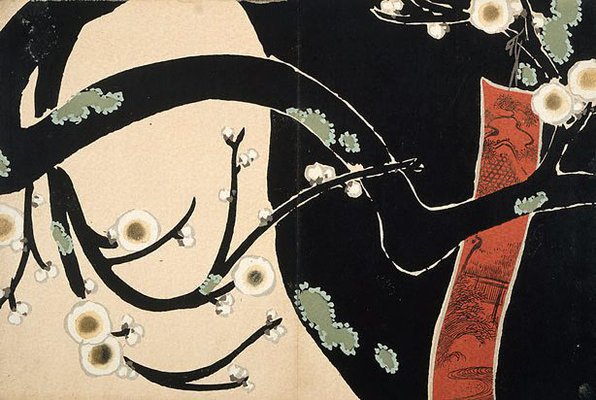
g - Ume [A plum tree], 29.8 x 44.5 cm, image; verso leaf g and leaf h
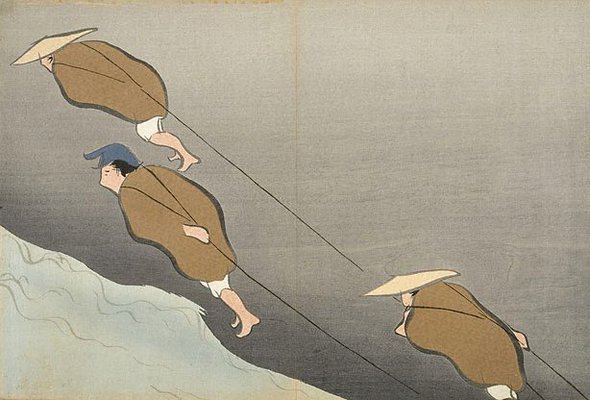
h - Hikifune [Pulling the boat], 29.8 x 44.5 cm, image; verso leaf h and leaf i
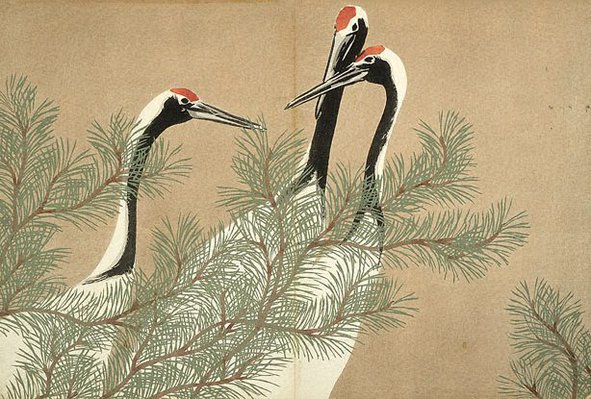
i - Tsuru [Cranes], 29.8 x 44.5 cm, image; verso leaf i and leaf j
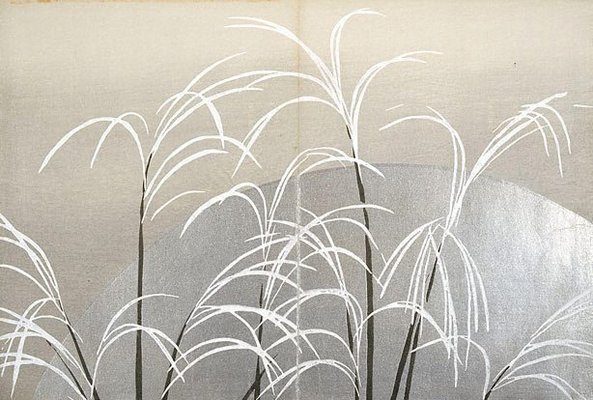
j - Obana ni tsuki [Pampas grasses and the moon], 29.8 x 44.5 cm, image; verso leaf j and leaf k
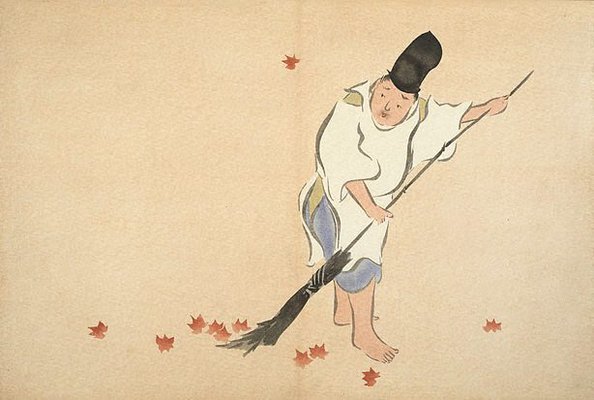
k - Eji (A guard), 29.8 x 44.5 cm, image; verso leaf k and leaf l
l - Kikujidô (A boy sitting), 29.8 x 44.5 cm, image; verso leaf l and leaf m
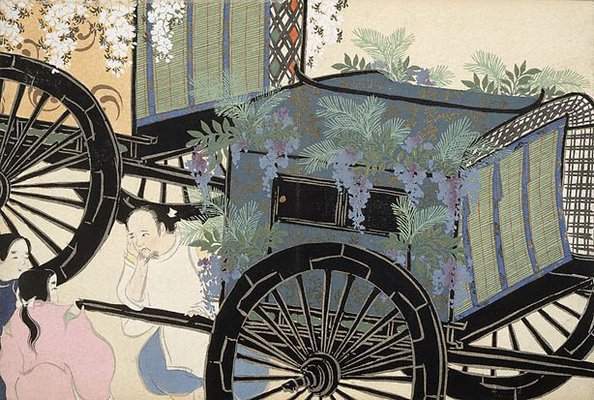
m - Hanazashi-guruma [A cart with flowers], 29.8 x 44.5 cm, image; verso leaf m and leaf n
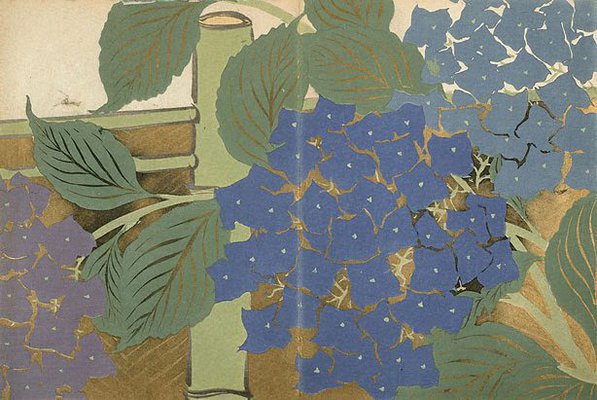
n - Ajisai [Hydrangeas], 29.8 x 44.5 cm, image; verso leaf n and leaf o
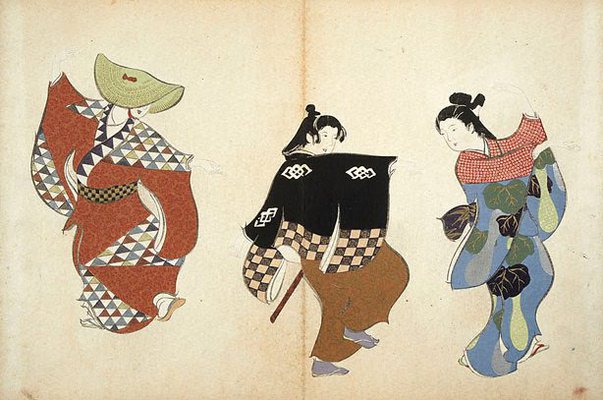
o - Odori [Dancing], 29.8 x 44.5 cm, image; verso leaf o and leaf p
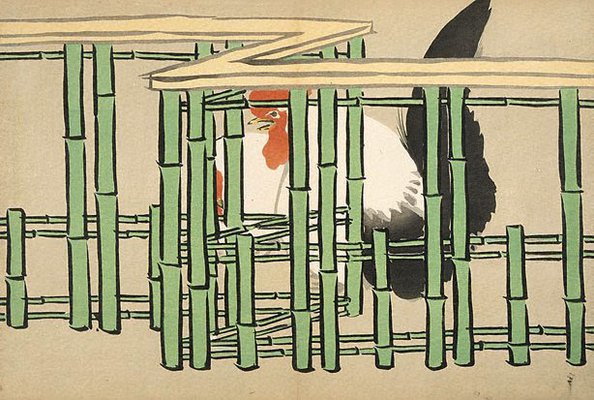
p - Chabo [Bantams], 29.8 x 44.5 cm, image; verso leaf p and leaf q
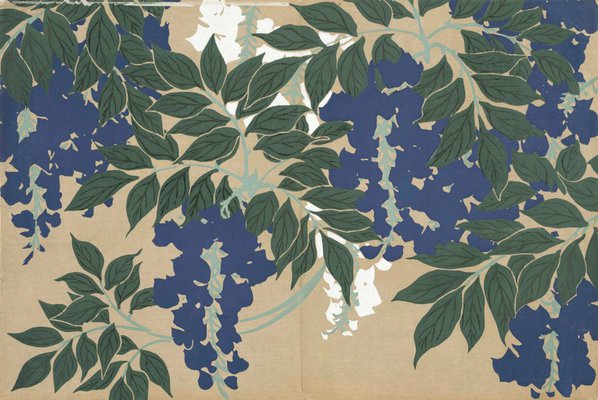
q - Fuji [Wisterias], 29.8 x 44.5 cm, image; verso leaf q and leaf r
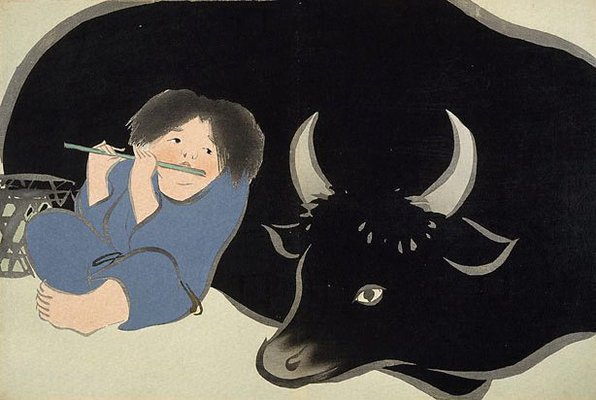
r - Bokudô [A cowboy], 29.8 x 44.5 cm, image; verso leaf r and leaf s
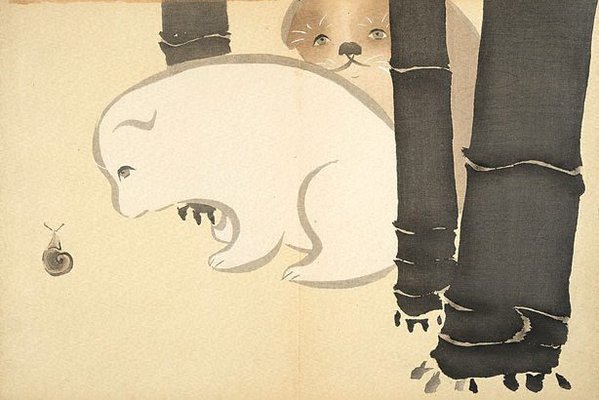
s - Kuji [Puppies], 29.8 x 44.5 cm, image; verso leaf s and leaf t
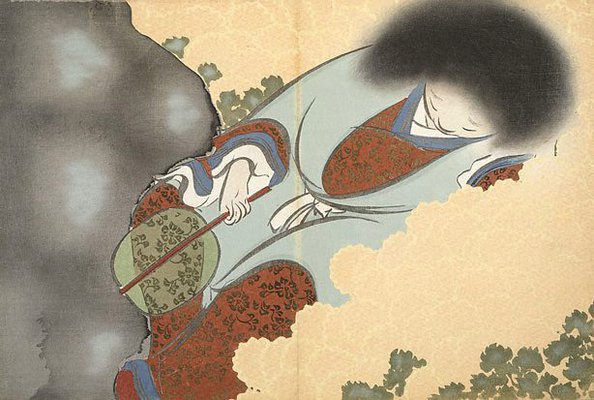
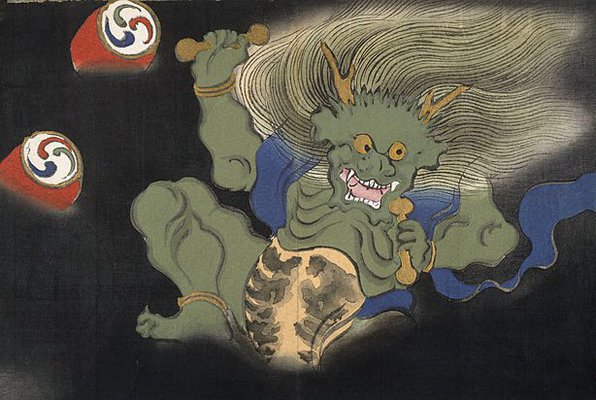
t - Kaminari [The thunder god], 29.8 x 44.5 cm, image; verso leaf t and leaf u
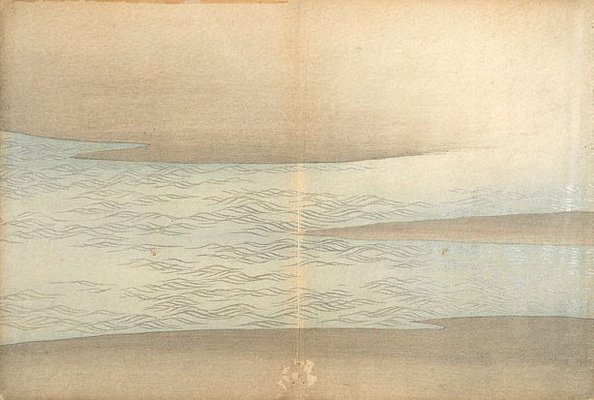
u - Sazanami [Ripples], 29.8 x 44.5 cm, image; verso leaf u and leaf v
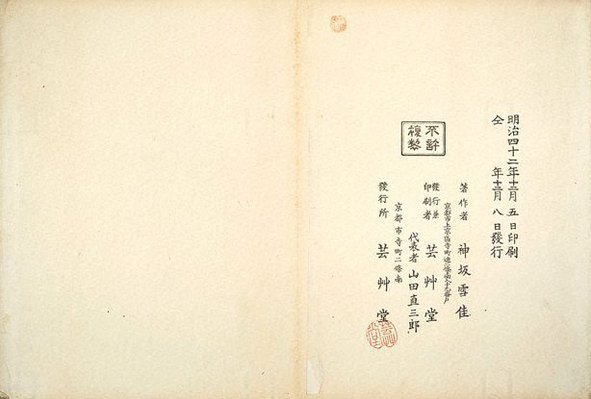
v - [dates of printing, publication, artist's name and address, publisher's name and address], 29.8 x 44.5 cm, text; verso leaf v
- Signature & date
Not signed. Not dated.
- Credit
- Purchased with the assistance of the Sidney Myer Fund 1991
- Location
- Not on display
- Accession number
- 176.1991.2.a-v
- Copyright
- Artist information
-
Kamisaka Sekka
Works in the collection
- Share
-


-
About
Kamisaka Sekka, a Kyoto artist, was instrumental in reforming the anachronistic craft designs of his day. While others tried to adopt the European art nouveau style in ceramics, lacquerware and textiles, Kamisaka worked with craftspeople, providing them with his Rinpa-inspired designs. His three-volume illustrated book 'Momoyo-gusa (the world of things), published in 1909, is an important example of the early 20th century adaptation of Rinpa-style designs. Reproduced in woodblock prints, Kamisaka's images freshly reinterpret classical subjects using the 'wash' technique characteristic of the school.
Kikujido (child of the benevolent chrysanthemum) is a figure from Chinese legend. A page boy at the time of the ancient dynasty of Western Zhou, he was banished from court and sent into exile, where he drank from a stream in which chrysanthemum flowers had been soaked and obtained immortality. The story was a popular theme for painting and craftworks and was made into a No play.
The Asian Collections, AGNSW, 2003, pg.232.
-
Places
Where the work was made
Japan
-
Exhibition history
Shown in 3 exhibitions
Heroes and Villains, Art Gallery of New South Wales, Sydney, 19 May 2001–19 Aug 2001
Glorious, Art Gallery of New South Wales, Sydney, 27 May 2017–06 Jan 2019
In one drop of water, Art Gallery of New South Wales, Sydney, 15 Jun 2019–21 Feb 2021
-
Bibliography
Referenced in 4 publications
-
AJIOKA Chiaki (Curator), Heroes and villains: from Japan's floating world, Sydney, May 2001, 7. cat.no. 2.3
-
Josefa Green (Editor), TAASA Review, Sydney, Jun 2012, cover (colour illus.). image is of part l, Kikujidô (A boy sitting)
-
Jackie Menzies (Editor), The Asian Collections Art Gallery of New South Wales, 'Edo Painting Schools', Sydney, 2003, 232 (colour illus.).
-
Khanh Trinh (Editor), Kamisaka Sekka: dawn of modern Japanese design, Sydney, 2012, 142-151 (colour illus.). cat.no. 82
-