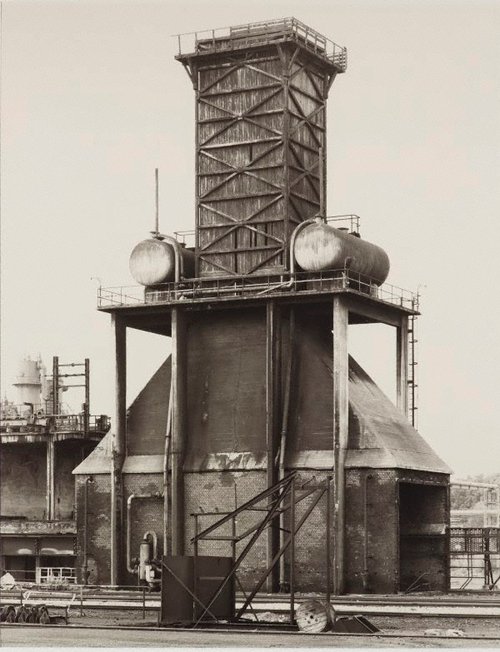
Title
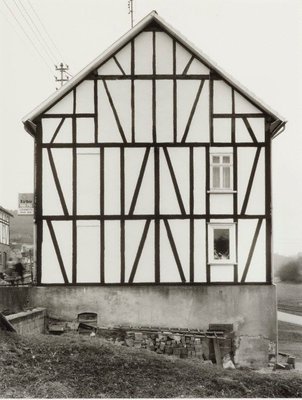
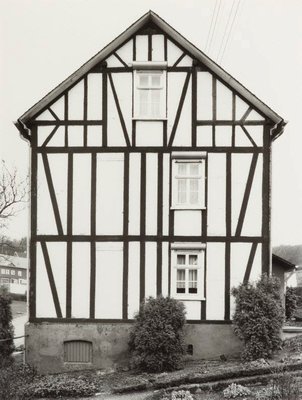
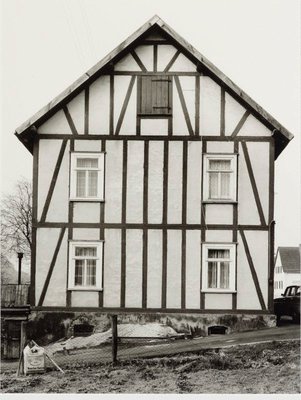
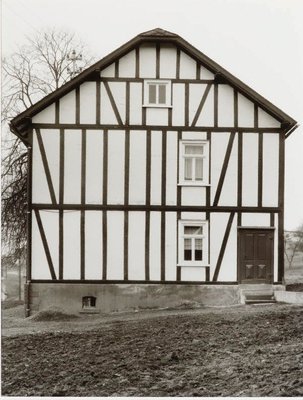
Framework houses
1959-1971
printed 2000
Artists

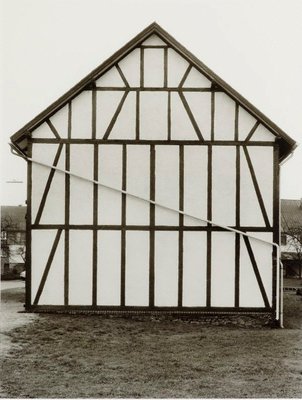


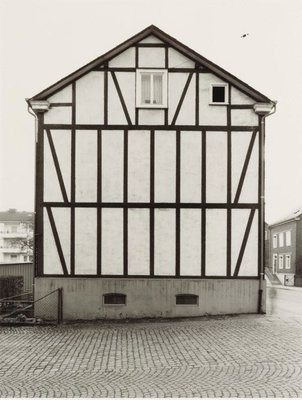

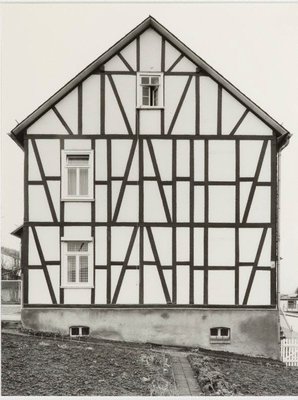


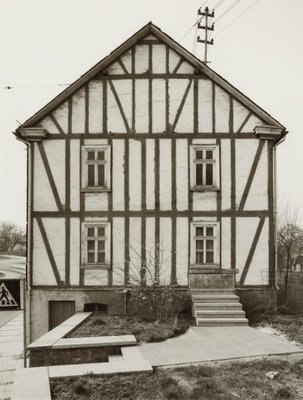
-
Details
- Dates
- 1959-1971
printed 2000 - Media category
- Photograph
- Materials used
- 15 gelatin silver photographs
- Dimensions
- 15 photographs: each 40.0 x 30.5 cm sight; 56.5 x 46.5 x 2.8 cm frame
- Signature & date
Not signed. Not dated.
- Credit
- John Kaldor Family Collection
- Location
- Not on display
- Accession number
- L2011.26.a-o
- Copyright
- © Bernd and Hilla Becher. Courtesy Sonnabend Gallery
- Artist information
-
Bernd Becher
Works in the collection
- Artist information
-
Hilla Becher
Works in the collection
- Share
-


-
About
Since 1959 Bernd and Hilla Becher have produced photographs of industrial and domestic architecture. Their ordered images (which they call ‘typologies’) of blast furnaces, cooling towers, silos and workers’ houses record the monuments of a rapidly diminishing industrial era. However, the Bechers were equally driven by aesthetic considerations, with photographs of like objects assembled into groups where precise lighting and tonal density give equivalent weight to each visual element.
The Bechers’ typological practice has been associated with the formal and serial repetition espoused by minimal and conceptual art of the 1960s. Despite these connections, however, their photography has sat largely outside trends in art practice, the artists maintaining a rigorously systematic approach to their chosen subject matter. The Bechers belong to a distinguished tradition of early 20th-century German photography exemplified by the work of August Sander, Albert Renger-Patzsch and Karl Blossfeldt, all of whom contributed in different ways to the definition of ‘objective’ photography.
-
Exhibition history
Shown in 2 exhibitions
Journey to now: John Kaldor art projects and collection, Art Gallery of South Australia, Adelaide, 18 Apr 2003–06 Jul 2003
Primary structures and speculative forms, Art Gallery of New South Wales, Sydney, 15 Oct 2016–06 Aug 2017
-
Bibliography
Referenced in 3 publications
-
Adam Free, Journey to now: John Kaldor art projects and collection, Adelaide, 2003, 60.
-
Susanne Lange, Bernd and Hilla Becher: life and work, 2007, 131 (illus.). no.26, illustration of 13 works
-
Wayne Tunnicliffe (Editor), John Kaldor family collection: Art Gallery of New South Wales, Sydney, 2011, 220, 222-23 (illus.).
-