Title
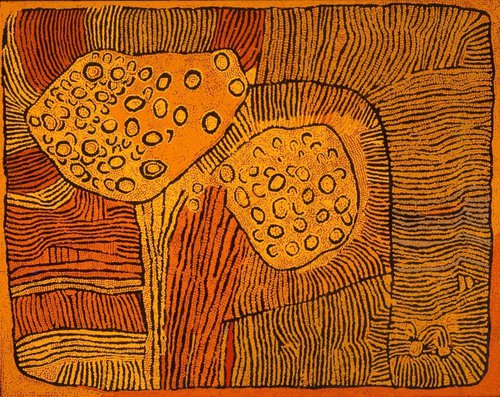
Untitled
(2004)
Artist

-
Details
- Place where the work was made
-
Walungurru (Kintore)
→
Northern Territory
→
Australia
- Date
- (2004)
- Media category
- Painting
- Materials used
- synthetic polymer paint on canvas
- Dimensions
- 153.0 x 122.0 cm stretcher
- Signature & date
Not signed. Not dated.
- Credit
- Purchased with funds provided by the Aboriginal Art Collection Benefactors 2006
- Location
- Not on display
- Accession number
- 49.2006
- Copyright
- © Naata Nunurrayi. Licensed by Aboriginal Artists Agency Ltd
- Artist information
-
Naata Nungurrayi
Works in the collection
- Share
-


-
About
The Papunya Tula Artists documentation for this work states:
This painting depicts designs associated with the soakage water site of Unkunya, west of the Pollock Hills in Western Australia. The Two Snake Dreaming passed through this site after travelling from far in the east. The soakages at the site, represented by the large roundels, were said to have been formed by the snakes at the point where they went underground.
In mythological times a group of ancestral women travelled through this site from the west on their way to Marrapinti. At Marrapinti the women made the nose-bones, also known in Pintupi as marrapinti, which are worn through a hole in the nose-web. These nose-bones were originally worn by both men and women but are now only worn by the older generation on ceremonial occasions. The women later travelled east passing through Ngaminya and Wirrulnga collecting the edible berries known as kampurarrpa or desert raisin from the small shrub Solanum centrale.
© Art Gallery of New South Wales, 2006
-
Places
Where the work was made
Walungurru (Kintore)
-
Bibliography
Referenced in 1 publication
-
Hetti Perkins, Art + soul: a journey into the world of Aboriginal art, 'Home + away', pg. 1-86, Carlton, 2010, 24-25 (colour illus.), 278.
-