-
Details
- Date
- 2006
- Media category
- Time-based art
- Materials used
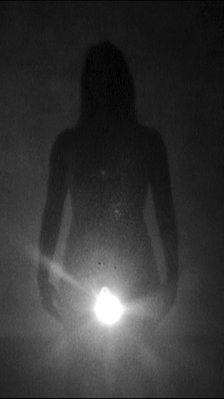
- digital tape (HDCAM) shown as dual channel (diptych) digital video, black and white, silent, plasma screen
- Edition
- 1/7
- Dimensions
- duration: 00:21:27 min; aspect ratio: 9:16; plasmas: 102.0 x 122.0 x 9.0 cm overall
- Signature & date
Signed l.l. certificate of authenticity, black fibre-tipped pen "Bill Viola". Not dated.
- Credit
- Gift of the John Kaldor Family Collection 2011. Donated through the Australian Government's Cultural Gifts Program
- Location
- Not on display
- Accession number
- 252.2011.a-b
- Copyright
- © Bill Viola
- Artist information
-
Bill Viola
Works in the collection
- Share
-


-
About
Performers: Jeff Mills and Lisa Rhoden
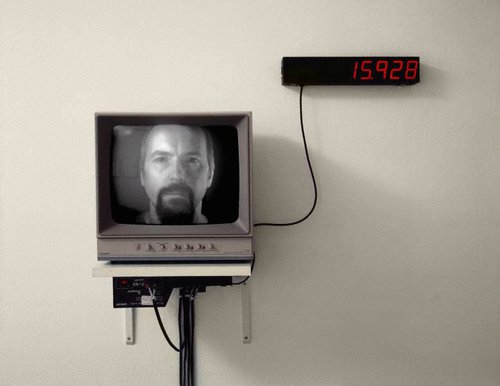
Bill Viola began experimenting with the possibilities of video as an art form early in the 1970s. He explores and manipulates the specific characteristics of his medium, such as light and linear time, by speeding up, slowing down and reversing his footage. He uses different cameras to create particular atmospheres, ranging from black-and-white surveillance footage to high-end video transferred from 35mm film.
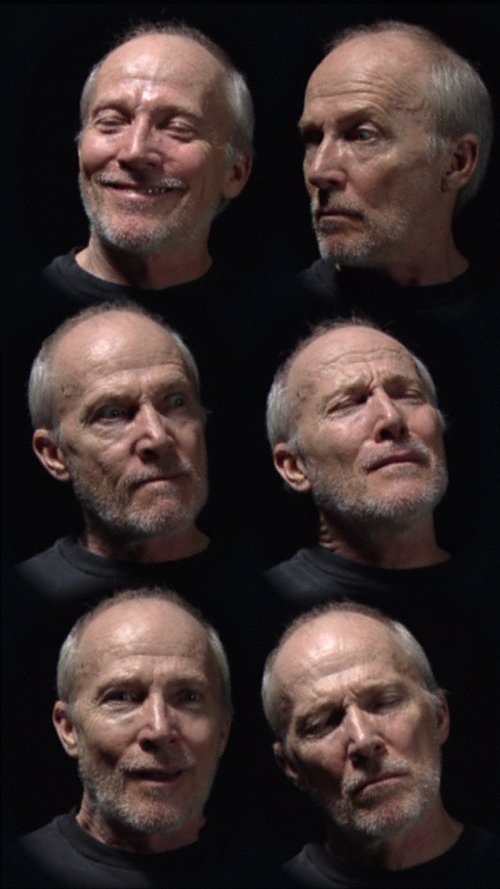
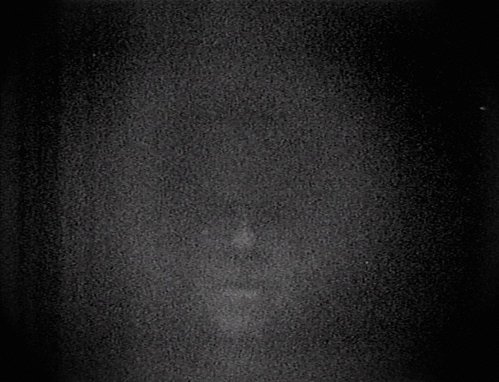
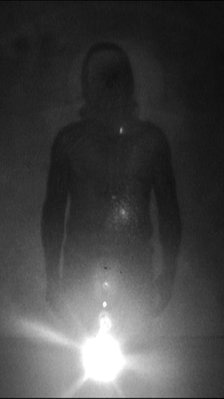
Viola has long been interested in eastern religions and more recently in Christian iconography, in particular images that evoke our ephemeral existence on earth. ‘Observance’ is from ‘The passions’ series. In this work figures move out of the dark towards the portal of the screen, gazing beyond the frame into the viewer’s space as if into a tomb and then with a melancholy air they move away. ‘Six heads’ explores a range of human passions while in ‘Bodies of light' a male and a female stand in water while a globe of light moves up and down their bodies, eventually dissolving their forms.
-
Exhibition history
Shown in 3 exhibitions
40 years: Kaldor Public Art Projects, Art Gallery of New South Wales, Sydney, 02 Oct 2009–14 Feb 2010
John Kaldor Family Collection Artist Room #2 - Francis Alys and Bill Viola, Hazelhurst Arts Centre, , 22 Mar 2014–04 May 2014
John Kaldor Family Collection Artist Room #2 - Francis Alys and Bill Viola, Penrith Regional Gallery & The Lewers Bequest, Emu Plains, 31 May 2014–24 Aug 2014
John Kaldor Family Collection Artist Room #2 - Francis Alys and Bill Viola, Newcastle Art Gallery, Newcastle, 15 Aug 2015–01 Nov 2015
Five Centuries of Melencolia, University of Queensland Art Museum, Brisbane, 30 Aug 2014–30 Nov 2014
-
Bibliography
Referenced in 7 publications
-
Simon Grant, Bill Viola Love/Death: The Tristan Project, 'Bill Viola: the visual pilgrim', pg.4-7, 2006, 7, 21, 22-23 (illus.).
-
Shirley J. Madill, Sublime embrace: experiencing consciousness in contemporary art, 2006.
-
Kira Perov, Bill Viola: visioni interiori, 2008.
-
Kira Perov, Bill Viola: Bodies of Light, 2009.
-
Randy Jayne Rosenberg, Missing peace: artists & the Dalai Lama, 2006.
-
Peter Sellars, New Crowned Hope: Festival Wien, 2006.
-
Wayne Tunnicliffe (Editor), John Kaldor family collection: Art Gallery of New South Wales, Sydney, 2011, 257, 264-65 (illus.).
-