Title
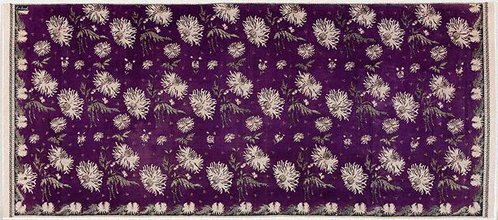
Skirt cloth (kain sarong) with bird and flower design
circa 1920
Artist

-
Details
- Other Title
- Piece of sarong with bird and flower design
- Place where the work was made
-
Pekalongan
→
Central Java
→
Java
→
Indonesia
- Date
- circa 1920
- Media category
- Textile
- Materials used
- cotton, dyes; batik
- Dimensions
- 106.0 x 198.0 cm
- Credit
- Gift of Nomadic Rug Traders 2003
- Location
- Not on display
- Accession number
- 203.2003
- Copyright
- Artist information
-
Eliza van Zuylen workshop
Works in the collection
- Share
-


-
About
In the decades around 1900 Dutch and Eurasian women played an innovative role in batik production, establishing batik workshops along the north coast of Java. One of the most famous of these ateliers was directed by Eliza van Zuylen whose workshop operated in Pekalongan from 1890-1946. Her batiks catered to the tastes of the local Dutch, Eurasian and Chinese settlers as well as to the Western export market. Typically, these cloths were brightly coloured with naturalistic designs of birds and her trade mark bouquets of flowers "buketan".
Asian Art Department, June 2003.