Title
The Levels of Hell
early 19th century
Artists
Unknown Artist

-
Details
- Place where the work was made
-
Rajasthan
→
India
- Cultural origin
- Jain
- Date
- early 19th century
- Media categories
- Book , Painting
- Materials used
- gouache on paper; 62 leaves comprising 58 full page illustrations plus 4 fly leaves, Prakrit in black Devanagari script; bound in beige canvas cover with scalloped flap and tie
- Dimensions
-
16.0 x 30.5 cm
:
a - pencilled script, leaf a; leaf a verso
b - script, leaf b blank: leaf b verso script
c - painting, leaf c script; leaf c verso painting
d - script, leaf d; leaf d verso
e - painting, leaf e; leaf e verso
f - script, leaf f; leaf f verso
g - painting, leaf g; leaf g verso
h - script, leaf h; leaf h verso
i - painting, leaf i; leaf i verso
j - script, leaf j; leaf j verso
k - painting, leaf k; leaf k verso
l - script, leaf l; leaf l verso
m - painting, leaf m; leaf m verso
n - script, leaf n; leaf n verso
o - painting, leaf o; leaf o verso
p - script, leaf p; leaf p verso
q - painting, leaf q; leaf q verso
r - script, leaf r; leaf r verso
s - painting, leaf s; leaf s verso
t - script, leaf t; leaf t verso
u - painting, leaf u; leaf u verso
v - script, leaf v; leaf v verso
w - painting, leaf w; leaf w verso
x - script, leaf x; leaf x verso
y - painting, leaf y; leaf y verso
z - Part z, leaf z; leaf z verso
aa - painting, leaf aa; leaf aa verso
bb - script, leaf bb; leaf bb verso
cc - painting, leaf cc; leaf cc verso
dd - painting, leaf dd; leaf dd verso
ee - painting, leaf ee; leaf ee verso
ff - script, leaf ff; leaf ff verso
gg - painting, leaf gg; leaf gg verso
hh - script, leaf hh; leaf hh verso
ii - painting, leaf ii; leaf ii verso
jj - script, leaf jj; leaf jj verso
kk - painting, leaf kk; leaf kk verso
ll - script, leaf ll; leaf ll verso
mm - painting, leaf mm; leaf mm verso
nn - script, leaf nn; leaf nn verso
oo - painting, leaf oo; leaf oo verso
pp - script, leaf pp; leaf pp verso
qq - painting, leaf qq; leaf qq verso
rr - script, leaf rr; leaf rr verso
ss - painting, leaf ss; leaf ss verso
tt - script, leaf tt; leaf tt verso
uu - painting, leaf uu; leaf uu verso
vv - script, leaf vv; leaf vv verso
ww - painting, leaf ww; leaf ww verso
xx - script, leaf xx; leaf xx verso
yy - painting, leaf yy; leaf yy verso
zz - script, leaf zz; leaf zz verso
aaa - painting, leaf aaa; leaf aaa verso
bbb - script, leaf bbb; leaf bb verso
ccc - painting, leaf ccc; leaf ccc verso
ddd - script, leaf ddd; leaf ddd verso
eee - painting, leaf eee; leaf eee verso
fff - script, leaf fff; leaf fff verso
ggg - painting, leaf ggg; leaf ggg verso
hhh - script, leaf hhh; leaf hhh verso
iii - painting, leaf iii; leaf iii verso
jjj - script, leaf jjj; leaf jjj verso
kkk - script, leaf kkk; leaf kkk verso blank
- Credit
- Purchased 2008
- Location
- Not on display
- Accession number
- 178.2008.a-kkk
- Copyright
- Share
-


-
About
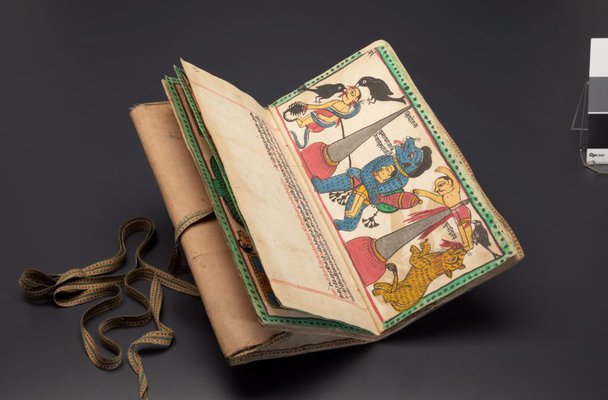
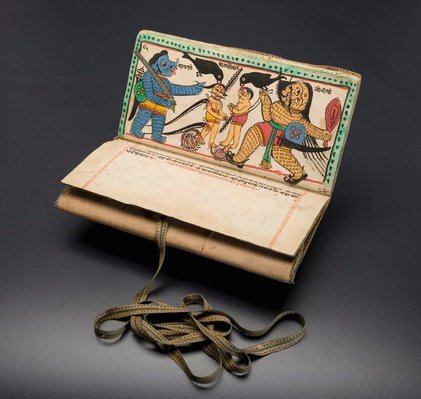
The Jain religion, together with Hinduism and Buddhism, is one of the main religions of India and has inspired a rich pantheon of imagery relating to its beliefs.Though depictions of the various torments to be endured in the Jain hells were frequently depicted in manuscripts, these leaves are unusually large and colourful. They appear to have once belonged to a Khetrasamaasa, a Jain cosmological text. In Jain cosmology, seven hells are located at the very bottom of the universe, one on top of another and are progressively awful in order of descent in the punishments meted out there. The hells are inhabited by the Paramadharmika, the 'extremely unjust' gods, who vie with each other in devising cruel punishments for those unlucky enough to be reborn there. Among those featured here are the fate of being sawn in two while being pecked by crows, being swallowed by a giant snake, and being shot by arrows and rifles simultaneously. The robust drawings are appealing in their energy and conviction.
-
Exhibition history
Shown in 1 exhibition
Beyond Words: Calligraphic Traditions of Asia, Art Gallery of New South Wales, Sydney, 27 Aug 2016–30 Apr 2017
-
Bibliography
Referenced in 1 publication
-
Art Gallery of New South Wales, Art Gallery of New South Wales Annual Report 2007-08, Sydney, 2008, 68 (colour illus.).
-