Title
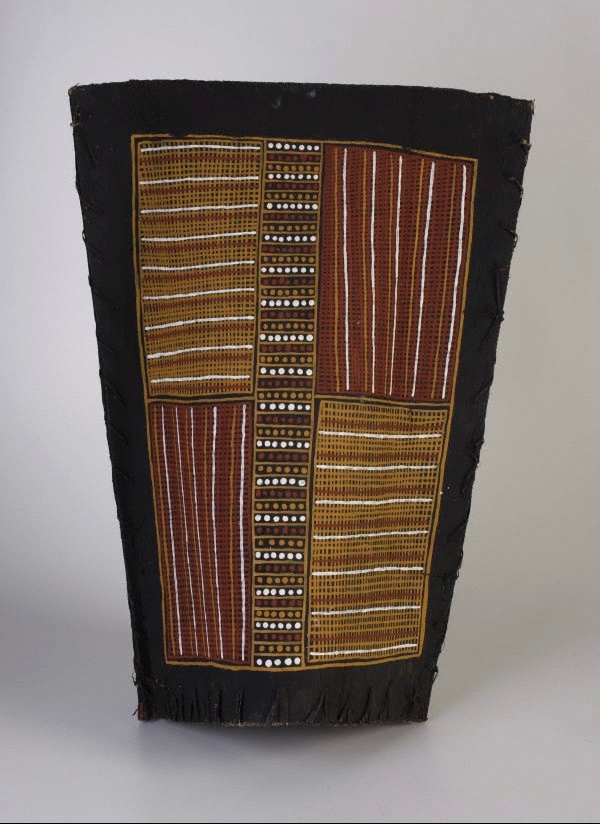
Tunga
circa 2002
Artist
-
Details
- Place where the work was made
-
Melville Island
→
Northern Territory
→
Australia
- Date
- circa 2002
- Media category
- Sculpture
- Materials used
- natural pigments on eucalyptus bark
- Dimensions
- 78.5 x 58.5 x 39.0 cm
- Signature & date
Not signed. Not dated.
- Credit
- Gift of Helen Read 2004
- Location
- Not on display
- Accession number
- 141.2004
- Copyright
- Artist information
-
Maryanne Mungatopi
Works in the collection
- Share
-


-
About
Tunga's are made from stringybark bark, which can only be collected during the wet season when the bark is moist and flexible. The bark is cut using a chainsaw, stripped smooth with a knife and cured over a fire before being bent into shape and sewn up with a bush string stripped from the native hibiscus. The tunga is left to dry for a few days before being painted with locally gathered ochres. Tungas were an everyday necessity for Tiwi, used to carry food. When a Tiwi person dies the tunga is placed upturned on the pukumani pole (grave-post) signifying the end of life. The tunga is decorated with designs associated with Tiwi ceremonial body designs.
© Australian Art Department, Art Gallery of New South Wales, 2004
-
Places
Where the work was made
Melville Island